
Closing Shift Animatronic Behavior Guide: How Each Hunter Responds
Six named hunters, six different rules. What the game says about how Freddy, Bonnie, Chica, Foxy, Golden Freddy and Fredbear hunt, and the counter or hiding response that goes with each.
The short answer
Quick answer
Each named animatronic in Closing Shift hunts by its own rules, so no single defence covers all of them. Foxy is handled by holding your light on its face, Freddy, Bonnie and Chica by a closet or the vents, and the singing cue by staying in the room you are already in. Golden Freddy and Fredbear get no separate counter — voice chat is the only response the description attaches to them. Barricades only buy time, because the animatronics kick the doors in.
- Foxy comes near: keep the light pointed at its face.
- Freddy, Bonnie or Chica comes near: hide in a closet or crawl through the vents.
- Golden Freddy or Fredbear comes near: no separate counter is listed for them.
- You hear singing: do not leave the room you are in.
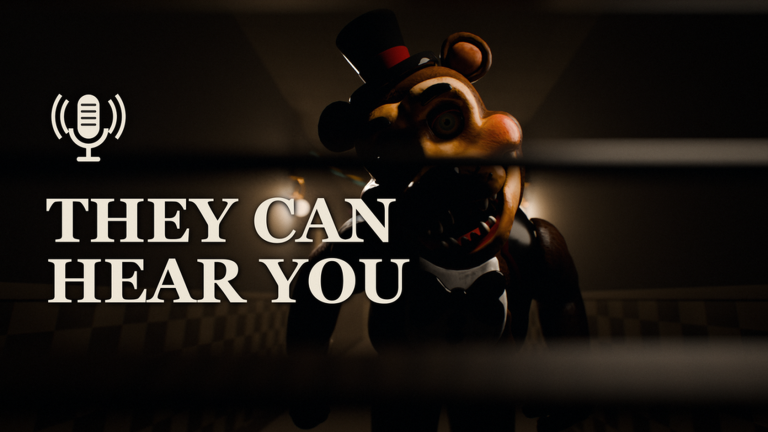
- Talking over voice chat: they listen, and saying the right thing may get you released — but it is not guaranteed.
Six named hunters, one response each
The description names six animatronics that come after you: Freddy, Bonnie, Chica, Foxy, Golden Freddy and Fredbear. It also states plainly that they hunt by their own rules, which is the single most useful thing to understand about the roster. It means there is no one safe response you can repeat all night. What the game tells you to do about Foxy is not what it tells you to do about Freddy, and a plan built entirely around barricades runs into a limit the description spells out just as clearly.
The sections below separate what the game actually states from what it leaves vague, so you know which reaction to trust and which one you are improvising. For the wider cast beyond the hunters, see the closing shift characters list.
What the game lists for each hunter
Each of the six hunters is described as hunting by its own rules, which the description does not spell out, so no single instruction covers the roster. The entries also do not give each name a distinct counter: Freddy, Bonnie and Chica share one, Foxy's names your light rather than a hiding spot, and Golden Freddy and Fredbear have none. Five of the six entries note that the animatronic can hear you over voice chat; Foxy's is the one that does not.
Data table
- Hunter(s)
- Freddy, Bonnie, Chica
- Response the game lists
- Hide in a closet or crawl through the vents when it is near.
- Hunter(s)
- Foxy
- Response the game lists
- Keep your light pointed at its face.
- Hunter(s)
- Golden Freddy, Fredbear
- Response the game lists
- No separate counter given in the description.
Foxy: keep your light on its face
Foxy is the one hunter with a signature counter in the game's own text: when it comes near, keep your light pointed at its face. Because that instruction is stated so directly, treat it as your first reaction. Foxy's entry does not point you to a hiding spot the way Freddy's, Bonnie's and Chica's do — it points to something you hold and aim. Match the response to the hunter named when it comes near, and treat the light as Foxy's listed answer.
The closing shift foxy guide goes further into what that hunter does across a night.
Freddy, Bonnie and Chica: a closet or the vents
For Freddy, Bonnie and Chica the description gives one shared instruction: when one of them is near, hide in a closet or crawl through the vents. It does not split the three into separate tells or separate counters, so you should not expect a distinct Freddy trick, a distinct Bonnie trick and a distinct Chica trick from the game's own text. That is a limit of the description rather than a claim that all three behave identically in play; it simply means the documented answer is the same for all three.
The practical reading is that a closet or a vent entrance is your answer whenever one of these three closes in, and both options are proper routes rather than a last resort. Each has its own page: closing shift freddy guide, closing shift bonnie guide and closing shift chica guide.
Golden Freddy and Fredbear: the pair the description leaves open
Golden Freddy and Fredbear complete the roster, and the description covers them more sparsely than the first three. Both are listed as hunting by their own rules that the description does not spell out, and both can hear you over voice chat. There is no Foxy-style light counter and no closet-or-vent instruction attached to this pair, which leaves voice chat as the only behaviour the game actually connects to them.
Treat them as the two hunters you know least about. The general voice-chat rule — they listen, and saying the right thing may let you go — is the one response that applies here, and the description stops there. It is worth knowing that the absence of a listed counter is not a hidden rule. A night that goes badly against one of them does not show that a particular trick failed; it only shows the description never told you what to do.
Voice chat: hearing you is the opening, not a guarantee
The most specific line in the description concerns speech: the animatronics can hear you over voice chat, and saying the right thing may make them let you go. The word "may" is carrying real weight. Voice chat is not a release button, and a phrase that worked once is not proof it will work the next time. What the line does establish is that talking is part of the intended solution rather than background noise the game ignores.
Because this is the only response the description attaches to Golden Freddy and Fredbear, it is worth knowing on its own terms instead of treating it as a bonus after hiding. The closing shift voice chat guide covers what the game does and does not say about the wording.
The singing cue: stay where you are
Singing is handled as a separate alert rather than as a hunter entry. If you hear singing, do not leave the room you are in; leaving during the singing is exactly the behaviour the game warns against. This runs against instinct, because the natural reaction to a strange noise in a horror game is to move away from it, and here the instruction is to override that reflex.
The rule is written as a room-level instruction, not as something tied to one part of the building, so it applies wherever the singing catches you. The survival guide lists the cue alongside the other defensive rules.
Hiding and barricades: two different kinds of protection
The description gives three movement options: hide in closets, crawl through the vents, and barricade doors. The first two are how you get away from a hunter that is already close — they are the listed response for Freddy, Bonnie and Chica, and they are what you use when you need to break contact. Barricades work differently. The description notes that the animatronics kick barricaded doors in, so a barricade is time you buy, not a barrier that holds.
That distinction is the one players most often get wrong. A blocked door is not safety; it is a way of turning a few seconds of noise into distance, and the time it takes them to kick it is the whole resource you get. Plan the escape that follows the barricade, rather than waiting behind it. Practical handling of each option is on how to hide in closets, the closing shift vents guide and how to barricade doors.
Seeing them before they reach you
Two things in the building help you act before contact instead of during it. The Puppet at the security desk can help you, and the cameras show what is moving through the restaurant, which makes the feeds the way to track hunter movement rather than walking blind into a corridor.
The two answer different questions. The cameras tell you where something is going, and the Puppet is where you go at the desk for help. The closing shift camera guide and the closing shift puppet guide cover each in full.
What an encounter costs you, and what it looks like
Scares are not silent bookkeeping. They arrive with on-screen outcomes you can recognise. In one recorded Phase 1 playthrough, pulling open a barricaded party-room door was followed by a Birthday Bear jump scare and the screen showed "SEIZED". Later in the same run, a Vintage Freddy jump scare showed "CAUGHT". After the SEIZED screen the player respawned and returned to the restaurant, so an outcome screen is not automatically the end of the attempt. That run also carried Infinite Lives and Minigun entries in its HUD, so how a normal attempt resolves after a scare is not something this single run settles.
One moment from the same run involves Bonnie, who belongs to the group with the shared closet-or-vents instruction. The player hid in a bathroom stall to get past a Bonnie encounter and carried on with the night. That is one working hiding spot on one occasion, not a promise that the same stall solves every Bonnie encounter.
Offence shows up in the material too. During a rabbit chase in that run, close-range shotgun blasts repelled the rabbit and the run continued. A single repel does not establish a general rule; it says that in that situation, at that range, the attack worked.
Putting the roster together
The list is short enough to hold in memory. Foxy and your light, Freddy and the other two with a closet or the vents, Golden Freddy and Fredbear with nothing beyond voice chat, and the singing rule sitting over all of it. Add the fact that barricades are distance rather than safety, and you have the response the game actually documents for every hunter it names.
The wider route through a night — keys, code, elevator — is a separate job from surviving the hunters. The closing shift survival guide, the closing shift roblox full walkthrough, the map and locations page and the beginner guide carry that side of the game.
Related Guides
Characters List: Hunters and Helper
Meet Freddy, Bonnie, Chica, Foxy, Golden Freddy, Fredbear and the Puppet with each encounter response.
Voice Chat: Do They Hear You?
Learn which animatronics react to voice chat and what saying the right thing may change.
Survival Guide: Counter Each Encounter
Use closets, vents, barricades, Foxy's light rule and voice chat when an animatronic finds you.